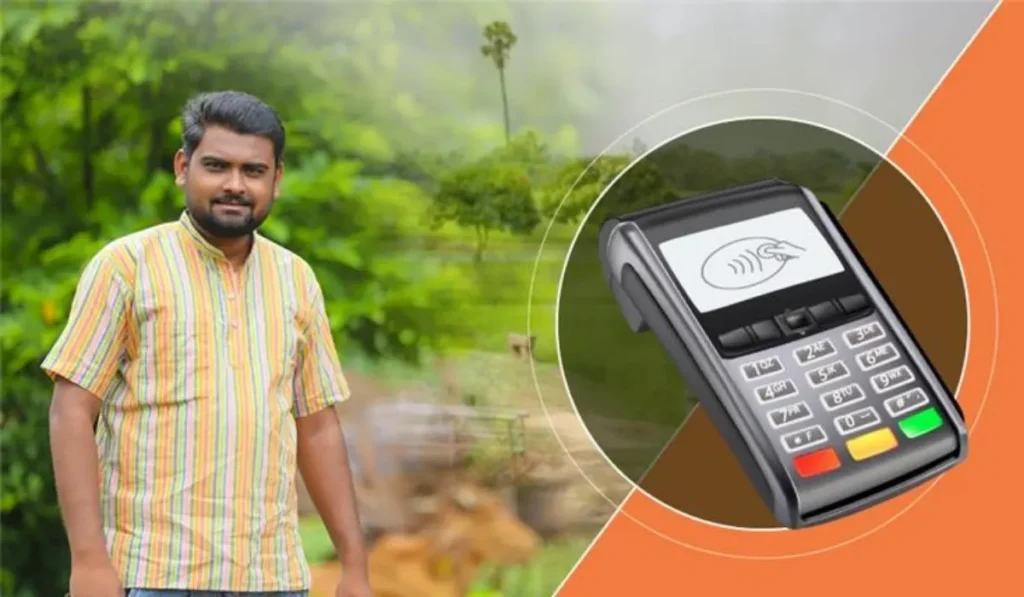
In many countries, especially in India, rural areas remain underserved in terms of banking infrastructure. Traditional ATMs are often too costly, require stable electricity and high foot traffic to justify their cost, and are difficult to maintain. Micro ATMs offer a viable solution to increase financial inclusion, bring banking access to remote villages, and support government welfare schemes. This article walks you through proven strategies for deploying micro ATMs in rural areas as well as managing them sustainably, addressing challenges and leveraging best practices.
What is a Micro ATM & Why It Matters
A micro ATM (or mATM) is a compact, portable device often operated by banking correspondents or local merchants. It enables essential banking functions like cash withdrawal, small deposits, balance inquiry, and fund transfers. Often integrated with biometric authentication (for example Aadhaar in India) and/or secure digital credentials, they are designed to work in low-infrastructure settings.
They matter because:
- Financial inclusion: They help the unbanked and underbanked access essential services without travelling long distances.
- Cost-effectiveness: Lower capital and running costs compared to full-size ATMs.
- Enabling government schemes & subsidy distribution: Useful for direct benefit transfers, pensions and other welfare payments.
Key Steps in Deploying Micro ATMs in Rural Regions
Deployment isn’t simply about putting devices in villages. There are critical planning, technology, and stakeholder steps.
Conduct Needs Assessment & Feasibility Study
- Map areas with no bank branches or traditional ATMs; prioritize villages with high population but low coverage.
- Assess infrastructure: electricity availability, mobile or cellular network strength, internet connectivity or GPRS.
- Understand local demand: how many people will use it, average transaction size/frequency, literacy and digital-literacy levels.
Select Appropriate Technology & Device Specification
- Device should support biometric authentication, smart-card or Aadhaar/ID-based verification.
- Offline/online capabilities, with fallback for intermittent connectivity.
- Low power consumption, battery backup options.
- Rugged, durable hardware to withstand rural environment (dust, heat, moisture).
Partner with Local Agents or Merchants
- Use local banking correspondents (BCs) or trusted local merchants (kirana stores, shops) to host micro ATMs.
- Train them on usage, customer service, basic repair, and troubleshooting.
- Incentivize agents via commission per transaction to ensure they remain motivated.
Legal, Financial & Regulatory Compliance
- Ensure KYC/Aadhaar linkages are properly done; authentication systems are secure.
- Comply with banking regulations, privacy laws, data security, etc.
- Secure funding or subsidies: government incentive schemes, grants, subsidies for rural infrastructure.
Logistics, Power & Connectivity Planning
- Plan for reliable power: solar backup, battery backups.
- Connectivity via mobile networks / GPRS / 4G / satellite where applicable.
- Cash logistics: secure supply of cash for disbursements, regular cash pickup, safe storage.
Managing Micro ATMs: Operations, Security & Support
Once deployed, ongoing management is critical for reliability, user trust, and cost efficiency.
Monitoring and Maintenance
- Remote monitoring of device health: uptime, transaction success rates, connectivity drops.
- Routine maintenance schedules; repairing or replacing faulty hardware.
- Local technicians or agents trained to do first level fixes.
Security & Fraud Prevention
- Biometric verification to prevent identity fraud.
- Secure hardware and tamper-proof casing; secure PIN / OTP / smart-card safety.
- Software updates for firmware, patches.
- Audit trails, record logs of transactions.
Cash Management & Liquidity
- Ensuring sufficient cash reserves at micro ATM point so that users can withdraw without inconvenience.
- Plan for cash collection or replenishment periodically.
- Measures for safe cash handling and secure transport, especially in remote locations.
Customer Support & Education
- Educate users: how to use micro ATMs, safety best practices.
- Multilingual or vernacular support if possible.
- Display of clear transaction charges, timings, etc., to build trust.
Challenges and Solutions
Deploying micro ATMs in rural areas comes with several obstacles. Below are common issues and how to mitigate them.
| Challenge | Solution |
|---|---|
| Poor power supply / outages | Use backup batteries, solar panels; devices that work on low power. |
| Weak connectivity / network issues | Implement store-and-forward; use mobile data / GPRS / satellite; offline modes where possible. |
| Low awareness & trust | Community outreach, financial literacy programs; demo usage; local agent awareness. |
| Low transaction volumes | Bundle services (bill payments, subsidies, remittances) to increase usage. |
| Security & fraud risk | Use biometric/ID verification, secure hardware; regular audits; ensure compliance. |
| Cash logistics & servicing costs | Outsourcing cash pickup; using local banking partners; optimizing routes. |
Best Practices & Case Studies
Case Study: Rural mATM Expansion in India
- One fintech firm deployed 1 lakh micro ATMs across rural India, covering ~95% of rural pin codes, showing that scale is possible with decentralization of agents and strong connectivity planning.
- Another provider shows micro ATMs are especially cost-effective for merchants, enabling extra income streams, particularly in rural and Tier-2/3 areas.
Best Practices
- Start with pilot programs in a few villages to test device specifications, agent performance, and customer acceptance.
- Use local language support and vernacular user interfaces.
- Leverage existing infrastructure: shops, common service centers (CSCs), post offices.
- Ensure transparent pricing and fees to avoid distrust.
- Regular feedback from users and agents to improve services.
Conclusion
Deploying and managing micro ATMs in rural areas is not without its challenges, but when done with careful planning, local partnerships, and robust support, it can dramatically improve banking access, financial inclusion, and the overall economic well-being of rural communities. With attention to technology, operations, security, and education, micro ATM networks can become sustainable and transformative. If you’re a fintech, bank, or social enterprise exploring ways to bridge the rural-urban banking divide, micro ATM deployment offers one of the most scalable, cost-effective and impactful solutions.